Plant Teachers and substances
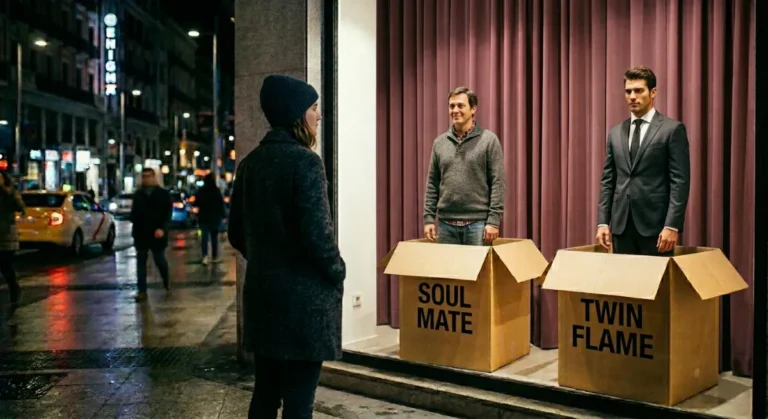
There are thousands of articles out there explaining what ayahuasca feels like. Hundreds comparing mushrooms with LSD, LSD with San Pedro, San Pedro with peyote. Entire forums debating which one is more powerful, which one heals more, which gives better visions, which is gentler for beginners. And beneath all of that sits one question nobody says out loud: which one is right for me?
The issue is not the answer. It is the question.
Looking for the right substance for your specific situation is trying to anticipate a territory that has its own rules, its own inhabitants, and zero obligation to meet your expectations. Not yours. Not anyone who came before you. Not even the facilitator who charged you for the retreat.
This is not a fairground ride with a description of effects on a sign at the entrance. Understanding what this is starts by letting go of the idea that you can prepare yourself by reading reviews.
Three perspectives, none of them complete
In the Western world, plant teachers and substances are talked about in three basic ways. All three have something true in them, all three fall short, and all three coexist without friction in the same ecosystem of weekend retreats, expanded consciousness podcasts and articles with photos of crystal bowls.
The first is the personal experience elevated to universal truth. Someone takes ayahuasca, has a life-changing experience and tells the story. Fine, up to a point. The problem comes when the account shifts from “this is what happened to me” to “this is what it is.” I saw serpents of light, therefore serpents of light are what appears. I relived a childhood trauma, therefore this is trauma therapy. Subjective experience converted into an instruction manual. The result is a collection of absolute truths that contradict each other and that nobody questions, because who is going to argue with someone about what they lived through.
The second is plant ideology. Around each substance grows a cult with its own doctrine and its guaranteed promise. Ayahuasca heals trauma. Mushrooms dissolve the ego. San Pedro opens unconditional love. LSD expands consciousness. Each one with its brand and its list of benefits. It is not that these things never happen. It is that they are presented as the fixed nature of each substance, when in reality they are interpretations filtered through the beliefs and expectations of those who passed through.
The third is scientific and psychological reduction. Medicine converts it into biochemistry: psilocybin acts on 5-HT2A receptors, DMT on serotonin receptors, MDMA releases oxytocin. Correct, but only partially. From there the leap is made that everything that happens is a neurochemical process, and whatever doesn’t fit gets labelled a hallucination and filed away. Psychology does something similar from its angle: it is all the unconscious, it is all unresolved trauma. The beings, the realms, the information that arrives without anyone having put it there are simply catalogued as projections.
None of them considers the possibility that what happens in there doesn’t fit into any of their boxes.
When ignorance turns them into drugs
There is something to clarify for anyone who arrives here with the prejudice that talking about plant teachers means talking about getting high.
Human beings, like practically all animals, have always looked for ways to alter their state of consciousness. That is universal and documented in every known culture. The relevant question is not whether altering consciousness is good or bad. It is where that alteration goes.
Alcohol takes you out of your usual state, lowers the pressure, loosens what was tight. But it leaves you in the same place, locked in a circle that leads nowhere new. Cocaine does something similar through a different mechanism. The same goes for many other substances that society accepts without blinking while looking with horror at the plants on this list.
Plant teachers and classic psychedelics do the opposite. They do not disconnect you. They switch off the filter that constructs your habitual version of reality and open you to information that in a normal state you cannot access. What appears when that happens has nothing to do with getting drunk or escaping. It is the opposite of escape.
On addiction: plant teachers and classic psychedelics have no mechanism for physical addiction. The tolerance they generate works in reverse compared to conventional drugs. If you repeat too soon, the substance simply has no effect because the body needs time to reset. And precisely because of this, using them indiscriminately serves no purpose. Without preparation, without context and without integration, the experience passes without leaving anything useful behind.
The key that lifts the veil
A plant teacher is not a drug with a specific indication. It is not therapy, although it sometimes produces effects that in the Western context we call therapeutic. It is a switch.
It deactivates the internal dialogue that decides what is real and what is not, where you end and where everything else begins. When that filter shuts down, what remains is both sides at the same time, without mediation.
What appears on the other side is not something you control. It is not reproducible. The same person, the same substance, similar conditions, can have completely different experiences in two consecutive sessions. You are not in a laboratory. You are in a place with its own rules, its own inhabitants and its own agenda.
This is where the effects come from that the West has made the central argument for all of this. Someone resolves an obsessive-compulsive disorder that had resisted treatment for years. Another sees a chronic depression disappear. Another gets out of an addiction. Documented, real things. But there is also very sick people who take the plant expecting it to heal them and nothing happens. No guarantee, no protocol, no reproducibility. Those effects are not the function of the plant. They are effects that may derive from the experience. Not always. Not for everyone.
When the shaman says “take this to heal yourself” he is not talking about the same thing a Western doctor understands by healing. In the indigenous worldview there is no separation between the physical and the invisible. Everything is the same system. You are out of balance, we restore the balance. The Huichol give peyote to temper the soul, to give strength, to centre. Not to treat a list of symptoms, because for them that list does not exist as a category.
The West arrived, saw the side effects, discarded the entire system and called what it found medicine. It imported the tool and threw away the map. And now there are people who arrive at an ayahuasca session with a list of traumas they want to resolve over a weekend, like someone going to the doctor expecting to leave with a prescription.
The plant did not read your list.
And yet what happens inside has a coherence that the medical model does not know where to put. Its solution is one word: hallucination. The perfect word for filing away a mystery and closing the investigation.
In the medical model, a hallucination is a perception without a real external stimulus. A system error, pathology. When that same word is applied to what happens inside an experience with plants, it does exactly that: file away. It is not an explanation. It is a label that functions as a full stop.
There are things that happen inside these experiences that do not fit in that box. People who under the effects of DMT access information they did not have and which later turns out to be verifiable. People who do not know each other, in different countries, who describe the same entities with the same level of detail and the same behaviour. People who make contact with something they describe as a bidirectional intelligence, not as a projected image.
Neuroscience says the brain generates all of that internally. Possible. But that answer assumes an internal origin because internal origin is the only thing the model contemplates. Psychology does the same from its angle: it is all projected unconscious content, the beings are archetypes, the visions are metaphors of the inner world. Coherent models with real utility, but neither is a complete explanation. They are different ways of filing away what does not fit.
What the shamanic tradition proposes, and what direct experience suggests to those who enter without the bias of either model, is that the territory is real, its inhabitants have their own agenda and calling it a hallucination is like calling something a dream that happened in the middle of the day because you have no other word available.
Warning: this is not a walk in the park
Working with plant teachers requires preparation. Not reading articles like this one, but arriving at the session in an adequate physical, mental and energetic state. There are substances and medications that are incompatible, with serious consequences. There are psychological states from which entering is a mistake.
And above all you need someone who knows what they are doing beside you. Not a facilitator with a weekend certificate. Someone with real experience, with judgement, with the capacity to read what is happening and to intervene if necessary. The difference between a well-conducted session and one without criteria is not aesthetic. It is the difference between the information arriving in a constructive way or the territory consuming you. This is not moralising. It is the same logic that would stop you entering a jungle without a map and without a guide.
The allies
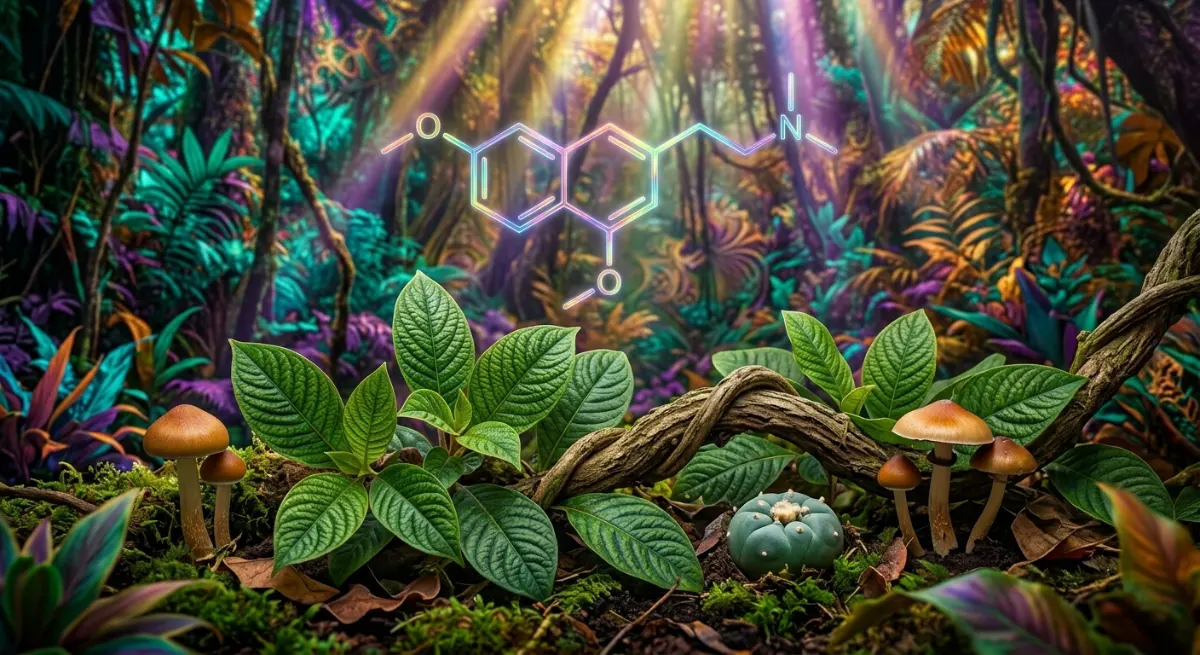
What follows is not a ranking or a user guide. It is a description of the character of each substance, of its way of opening, of the type of territory it tends to lead to. All of that varies depending on the person, the moment, the preparation and what the territory wants to show that day. The grouping is by chemical families because it explains something real: each family works differently and opens through different paths. Potency is the wrong question.
Tryptamines
The largest and most widespread family in nature. DMT, the base molecule of many of them, is present in the human body in small amounts. It is not a foreign substance. It is something the organism already knows.
Ayahuasca
A combination of the Banisteriopsis caapi vine, which contains the MAO inhibitors needed for DMT to be orally active, and a DMT-containing plant, usually chacruna. Without the combination there is no psychedelic experience. It is a plant technology built over centuries. Its particular quality is that it tends to go deep. It does not negotiate the content. What appears is not something you choose. Sessions are long, usually nocturnal, with intense physical effects that include purging in many cases. In the tradition that uses it, purging is part of the work, not an undesirable side effect.
DMT and Changa
Pure smoked DMT is the most direct entry into the territory. No transition. In seconds. The complete experience in twenty to thirty minutes. What appears has no equivalent in any other substance: geometries, beings, realms that are perceived as completely real. It is not a distortion of reality. It is something else that replaces reality entirely for the duration. Changa is DMT combined with herbs containing MAO inhibitors, which softens the entry and extends the experience. Same territory, different access.
5-MeO-DMT and Bufo Alvarius
A molecule distinct from DMT though in the same family. The Bufo Alvarius is the toad of the Sonoran desert whose secretion contains it in high concentration. What it produces has nothing to do with DMT in terms of content. There are no beings, no geometries, no narrative. There is complete dissolution. The self disappears and what remains is difficult to describe because there is no observer left to describe it. Some call it the most important experience of their lives. Others emerge disoriented for days. The real problem is not the experience itself. It is what comes after. The dissolution is so overwhelming that many people come out convinced they have been among the gods and from there begin to govern their lives. Integrating something of that magnitude requires time, support and a great deal of honesty about what actually happened. I have seen very few cases where someone integrates that experience coherently without help. Mass retreats and facilitators without real preparation multiply that risk.
Yopo
Powder from the seeds of Anadenanthera peregrina, inhaled. One of the oldest technologies for accessing this territory in South America. It contains DMT and bufotenin. Fast, physical entry, a shorter experience than ayahuasca but intense. Less surrounded by Western mythology, which in this context is almost an advantage.
Psilocybin mushrooms
The way they produce psilocybin is biochemically surprising: the enzymatic pathway they use diverges radically from what researchers expected, to the point that two different species generate the same molecule through completely different pathways. Fungal spores are probably the oldest organism on the planet. The fact that a substance with these characteristics has been used for millennia by cultures around the world to access the territory of the spirit is not a minor detail. Their character: more tolerant of the process than ayahuasca, not necessarily gentler, but with more room to move within the experience. Less linear, more associative.
Iboga and Ibogaine
A plant from Central Africa, central to the spiritual tradition of the Bwiti in Gabon. Ibogaine is its active compound, used in the West primarily to treat opioid addiction. The most physically demanding on this list. Sessions can last between twelve and thirty-six hours. It goes directly to what needs resolving without asking if you are ready. It is not a landscape for the curious. It requires a serious context and someone with real experience at your side. The effects on addiction are documented and significant, but the mechanism by which they occur is not purely biochemical.
Phenethylamines
A different family, a different type of access. The experience tends to be more bodily, more connected to the physical environment. Its spirit leads more toward grounding and clarity than toward dissolution or deep visionary journeys.
San Pedro and Peyote
Both contain mescaline as their main active compound. San Pedro or Wachuma grows in the Andes. Peyote grows in the desert of northern Mexico, sacred to the Huichol before any written record of it existed. The Huichol give peyote to temper. To give strength, balance, centreing. Not to seek spectacular visions or to resolve lists of traumas. To put the person back in their place. Sessions are long, potentially lasting twelve hours or more.
Synthetic mescaline
The same molecule without the plant. Same territory, same family. The debate about whether the absence of the plant context changes anything remains open.
Synthetics and semi-synthetics
LSD
Synthesised by Albert Hofmann in 1938, discovered by accident in 1943. Derived from ergot, a fungus that parasitises rye with its own ritual history. There is solid evidence that the Eleusinian Mysteries in ancient Greece used a drink made from barley infected by that fungus. The active molecule was LSA, a chemical cousin of LSD. The territory they opened was recognisably the same. Hofmann himself was one of those who investigated and defended that hypothesis. LSD amplifies. Whatever is there, it makes bigger. If there is order, there is more order. If there is chaos, there is more chaos. It lacks the directional pull of ayahuasca and the grounding quality of peyote. It is more neutral, more dependent on what the user brings.
MDMA
Different from everything above. It does not produce visions, does not lead to realms, does not dissolve the self. It lowers emotional defences and opens access to material that in a normal state is too protected to touch. Its use in therapeutic contexts for post-traumatic stress disorder has documented results: not because it produces a mystical experience, but because it allows touching pain without triggering the alarms of fear.
Particular territories
Cannabis
The most consumed, the most normalised, the most underestimated in this context. It has an ancient relationship with spiritual work in various traditions. At high doses and with real intention it opens something that its recreational use completely conceals. Familiarity means that few people approach it with the same criteria they would give to ayahuasca. In that sense it can surprise.
Opium and derivatives
The poppy has a ritual history as long as any other plant on this list. Opiates produce a state that is not visionary in the usual sense but that has its own type of access. Some currents of Persian Sufi mysticism have documented references to opium within their spiritual vocabulary. In the contemporary context the association with addiction covers almost everything else. But it belongs to the same history.
Off the map
Two plants that deserve separate mention. Not because they are less important but because the margin for error with them is of a different magnitude.
Floripondio and Datura
Floripondio, also known as Brugmansia or toé, and Datura or jimsonweed, are plants with ritual history in Andean and Mesoamerican cultures. They contain tropane alkaloids such as scopolamine and atropine, which produce a complete dissociation from reality. Not an alteration of perception. A total substitution. The problem is that dosage is extraordinarily difficult to control even from a biochemical point of view. The margin between a dose that produces an experience and a lethal dose is very narrow and varies enormously between plants, between parts of the same plant and between people. I have seen cases of severe and persistent psychosis. They are not anecdotal. Their use is not recommended, and especially not alone.
Salvia Divinorum
A plant endemic to the Mazatec sierra of Oaxaca, used for centuries by Mazatec healers in divination and healing ceremonies, primarily when mushrooms are not available. María Sabina used it. Its traditional form of administration is chewing the leaves, not smoking them. The smoked use, which is how most people take it today, produces a dissociation from the physical plane that can be very difficult to manage. The experience is brief but intense, and the type of disconnection it produces does not have the same nature as tryptamines or phenethylamines. There is a reason the tradition chews it and does not burn it.
Do I recommend it? Absolutely.
Yes. But not in just any way or with just anyone. Plant teachers are one of the few tools that allow access to perspectives that would otherwise take decades of serious meditative practice to barely approach. They are not the only path. But they are an extraordinarily effective one when used well.
The psychiatrist Claudio Naranjo, who dedicated decades to therapeutic work with these substances, made it clear: psychedelics should be used less than they are, but inserted into a path, with preparation and with expert people to guide. As part of a process, not as a consumption experience. That distinction changes everything.
Some shamans I have worked with put it exactly: the plant takes away the madness, even though it seems to drive you mad. It takes away the madness of living locked inside your own filters, convinced that what you see through them is the only reality there is.
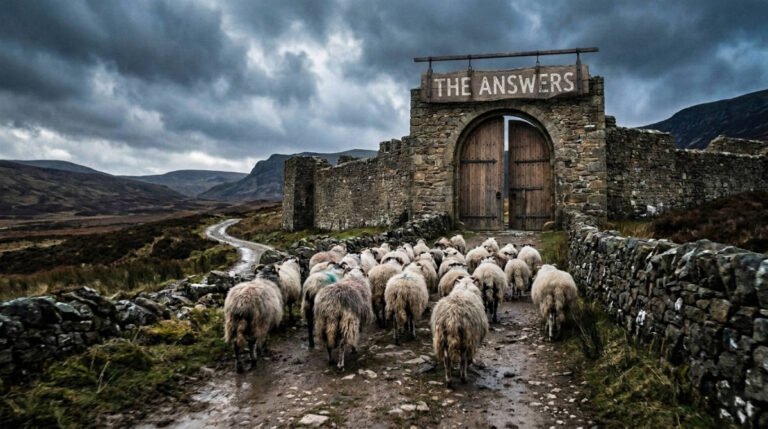
The question most people brought to this article still has no direct answer. Which is better, which heals more, which is the right one to start with. There is no answer because the question is poorly constructed. You are looking for guarantees in a place that does not give them.
What you can do is enter with fewer certainties and more respect. Recognise that you are going to interact with something you do not control, that has its own rules and that did not ask if you were ready.
That is already more than most people bring.
* * *
Do you have more questions than answers after reading this? You can write to me. I have worked with plant teachers for many years and can give you guidance on what makes sense in your case, how to do it and with whom.