Portals
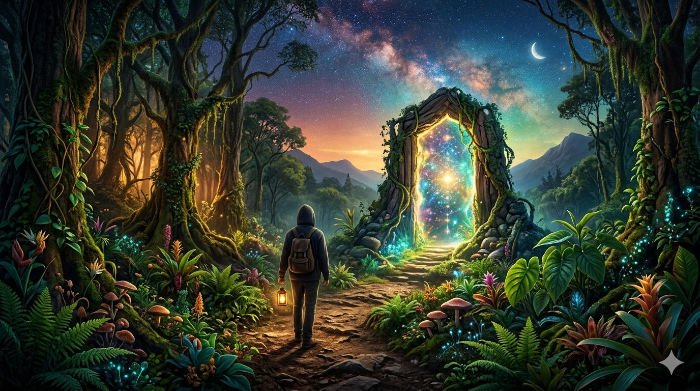
Every week, somewhere on the internet, someone announces that a portal is about to open. Sometimes it coincides with the full moon, sometimes with the solstice, sometimes with a date that repeats numbers: 11/11, 12/12, 5/5. There is always a specific time. There is always a promise of change, of a new era, of spiritual acceleration. And somewhere in the back of the mind of whoever reads it, without them even knowing, there is always the same image.
Stargate. Doctor Strange opening a crack in space with a flick of his wrist. The wormhole from Interstellar. The spinning sphere from Contact. Decades of cinema have planted a very specific image in the collective imagination of what a portal looks like: something visible, dramatic, with special effects. That image, even when nobody consciously connects it, is the invisible scaffolding holding the whole phenomenon up.
The version that circulates is simple: a portal is an energetic opening that occurs at specific moments, marked by an astrological alignment or a date with numerical weight. During that window, the boundary between planes thins out, the energy rises, and whoever is ready, or simply paying attention to their phone, can use it for a spiritual leap, a transformation, a new beginning.
Millions of people believe this. That is not an exaggeration. There are YouTube channels, Instagram accounts, podcasts and newsletters dedicated exclusively to announcing when the next portal opens and how to prepare for it. The business is considerable.
Then Come the Questions
Where exactly does that portal open? At a specific point in space? Everywhere at once? At what altitude? Does it count from the sofa, or do you have to go outside?
What if you live in a different time zone from whoever announced it? Is the portal at 22:22 your local time or theirs? If it opens in each zone separately, are there twenty-four different portals? Are they the same one? Do they communicate? Do they close on their own, or does someone have to close them?
And how do I know it has opened?
Aaaaargh.
None of these questions have answers. Not because they are difficult, but because nobody has ever asked them.
And the most important question: is there a single documented case of someone who did something specific during one of these windows and can explain exactly what happened? Not a feeling that something shifted. A concrete result. Something that would not have happened anyway, that day or the next, with portal or without.
Because the mind is very good at finding confirmations where it looks for them. If you expect a sign, the sign appears. That is not a portal. That is how attention works.
The universe, by the way, does not use the Gregorian calendar.
* * *
The concept has a birth date. In 1987, researcher José Argüelles organized the Harmonic Convergence, described as the opening of a portal toward the final stretch of the Great Mayan Cycle. It was the first event of its kind on a global scale, and the mix of ingredients was striking: Mayan calendar, I Ching, second-hand quantum physics and a bit of shamanism. Argüelles was genuine in his intention. What came after is another story.
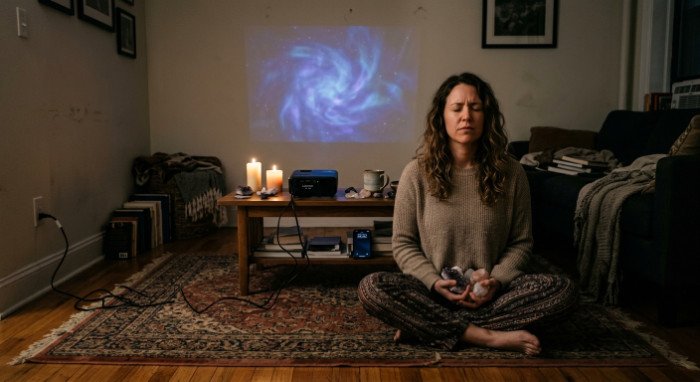
From there, the dated portal began replicating, mutating and being commercialized until it became what you see today: a weekly post, a group meditation at a specific time, and a crystal product with a discount to take advantage of «the portal’s energy».
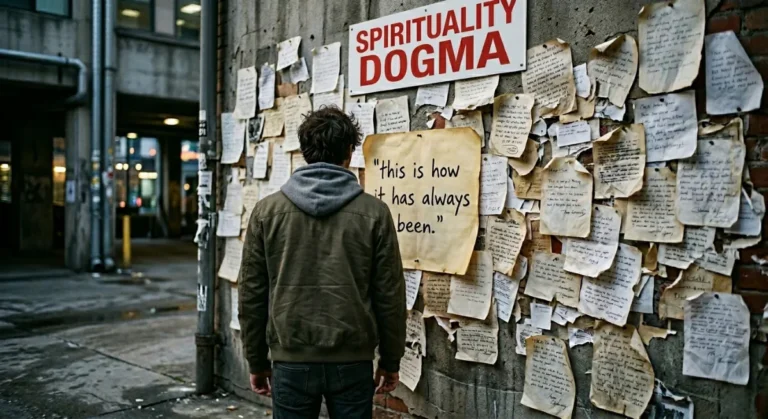
Nobody looked for earlier references. Because there are none: in no serious operative text, no shamanic tradition, no grimoire predating any of this does the word portal appear with this meaning. The concept did not exist. It was an invention. Nor does it appear in quantum physics, however much it gets invoked: wormholes are mathematical structures, unstable and unobservable. They are not portals. They do not have office hours.
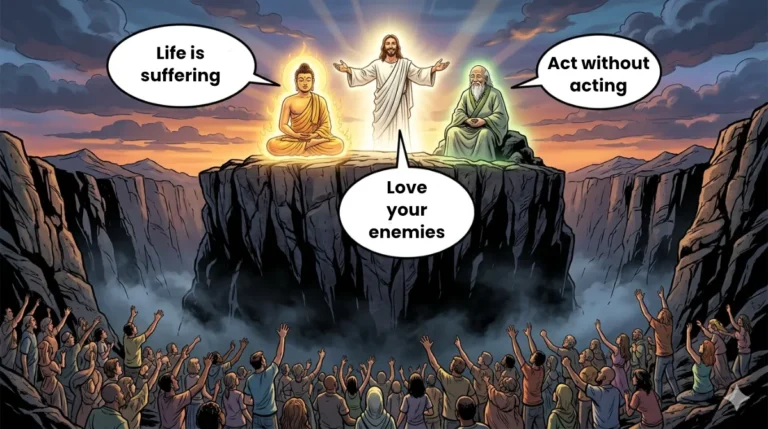
What is well documented in serious traditions, Dion Fortune, Josephine McCarthy among others, is the threshold. A boundary between the visible and the invisible that can be crossed, but which requires preparation, clear intention and, in many cases, risk. The threshold is not an event. It is the result of work. It does not arrive on its own.
In Hinduism, the tirtha, from the Sanskrit root meaning «to cross», describes just this: a crossing point between the human world and the divine. A ford. Physical places with a charge accumulated over centuries, reached through pilgrimage and ritual preparation. Not through a notification on your phone.
The opening requires something from whoever passes through it. It is not a spectacle that happens while you sit there waiting.
Portals, or thresholds, exist. But they are not what you think they are.
There are at least three distinct types, and even though they share a name they are not the same thing.
The first is the threshold that opens in a serious ritual of invocation or evocation. There is extensive documentation in the Western ceremonial tradition. What occurs is specific, has direction and intention. Whoever works it knows what they are doing, or should know before they start.
The second is the vortex that builds up in a space of sustained magical work, what the Romans called genius loci: the charge that belongs to a place. It does not appear all at once. It is the result of accumulated work over years. A space like that has a different density from one that has never been worked.
The third are places of telluric power: areas of the planet where that charge is so dense it shifts perception simply by being there. The ancient traditions marked them because those with trained perception recognised them without needing any explanation. They do not need a calendar because their charge does not depend on any alignment.
There is a legitimate human need behind all of this: the need to feel that today is a different kind of day, that a new beginning is possible. There is nothing wrong with that. The problem is not the need. The problem is confusing it with a real cosmic opening.
And what none of those three types of threshold has in common with the 22:22 portal is this: accessing any of them requires preparation. Either a naturally expanded perception, or a specific and sustained training. Both take time. Neither one comes included in the social media meditation.
Many people have had genuine experiences in their spiritual practice that come close to something like this. That is not dismissed. What gets dismissed is the idea that the experience occurs on its own, on a scheduled date, without prior work, because someone announced it in a story with trending music.
When you are genuinely close to something like this, there is no possible confusion. Consciousness comes and goes. Thought stops following its usual line. Perception opens to frequencies you do not normally register. There is something almost physical: a vibration, a pressure, the sensation that something shifts in the space around you.
Then comes a transfer of information that does not arrive in words but directly as understanding, as though something you already knew had suddenly fallen into order.
It is not pleasant or unpleasant. It is, simply, something else.
That does not get announced four days in advance on an account with a golden filter.
* * *
So, Have You Ever Been There?
Have you ever been in a place that left you different without being able to explain why? Have you ever felt, in a moment of serious practice or in some corner of the world, that something in your perception was opening toward something you cannot name?
You may have been close to something real.
Or you may have been expecting to feel something, and your mind gave you just what you asked for.
The difference between those two options is the most important question you can ask yourself in this field. And it is, precisely, the one that nobody in the world of dated portals wants you to ask.