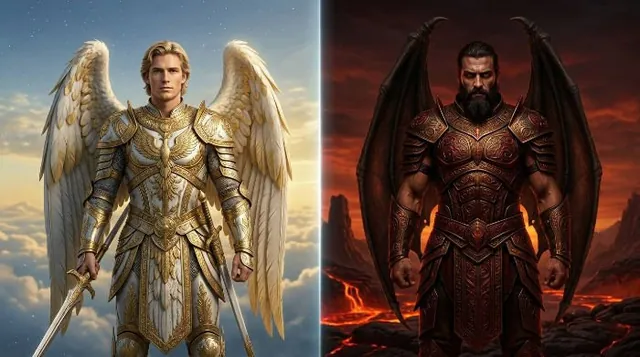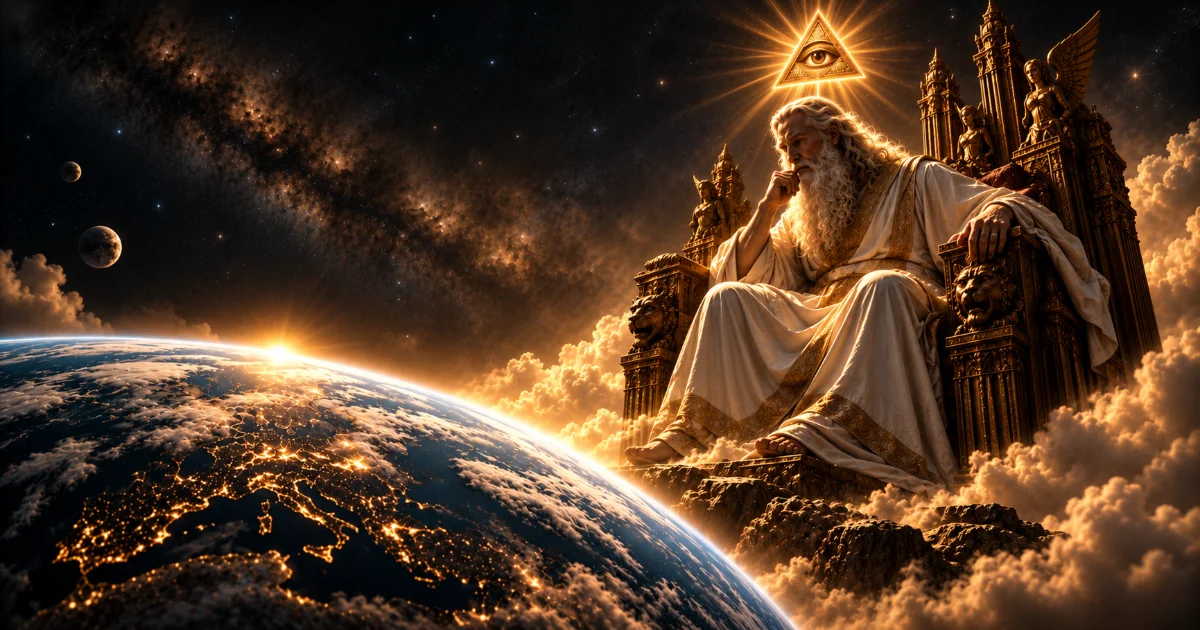
It happens to me all the time. Someone tells me, completely sure of themselves: I believe in God. God is love, God is goodness, God wants the best for me. And half a sentence later, without blinking: which is why I fear God.
And that’s where I stop.
Because they've just told me two things that can’t live together. If he’s pure love, if all he wants is your good, what are you afraid of? What is he going to do to you? The answer always comes, and it’s always the same: he tests you. He punishes you so you’ll learn.
Fine. Let’s think about that method for a second. Anyone who has tried to train a dog knows how it goes: if you hit it every time it does something, it learns to be afraid of you. It obeys, but out of fright, not because it understood anything. Reward it when it gets it right and it goes looking for the right thing, and that’s when it actually learns. Punishment gets you submission, not understanding. So an infinitely wise intelligence that picks, as its fair method, the one that teaches worst is either not that wise, or not that good, or not what you’ve been told it is.
And there’s one more step. That same God who punishes is also credited with infinite forgiveness. God always forgives, they say. But let’s be precise about which forgiveness. If it meant letting go of the grudge and still sending you the bill, like a judge who doesn’t hate you but puts you in prison anyway, then forgiveness and punishment could live together. That’s not the one they sell. The one they sell is the clean slate, the one that washes your sins and leaves them at zero. And that one runs head-on into a wall: if it really wipes the slate, there’s nothing left to punish. You can’t cancel the debt and collect it at the same time.
That’s usually where the silence falls. And it’s not because the person is stupid. It’s because of a single word that tangles everything from the start.
* * *
The rigged word
«God» is one of the few words that can mean two opposite things in the same sentence without anyone telling you which.
With the same word we name the source everything that exists comes from, the intelligence holding up the whole of creation. And with that same word we name a fellow with a temper, who has a side, who has a favorite book, who gets angry, who rewards and punishes, who has an opinion about who you sleep with.
They’re not two versions of the same thing. They’re two things on different floors. And nobody should feel accused: it’s not that believers hold both on purpose. The confusion is built into the word itself, and you jump from one meaning to the other without noticing. Since we call them the same, the conversation starts out broken. It’s like two people arguing about «the bank», one thinking of the money and the other of the bench in the park. They can go at it for hours and get nowhere.
* * *
The trap that bites its own tail
There’s a quick way to see it. Someone says: God is everything. All that exists, the totality.
Fine. And then evil shows up, pain, whatever hurts. You ask: is that God too? And they say: no, not that, that’s outside.
But you just told me he was everything. If something is left outside, he’s no longer everything, he’s a part. A big one, but a part. And a part isn’t the absolute you were selling me two sentences ago.
And this doesn’t stay in the abstract, it pops up the moment anyone opens their mouth. They say nothing exists outside God, but that you can offend him. That he’s almighty, but watch you don’t go against his will. That he’s pure love, and in the same conversation, that a punishment might come your way. Go against what, if there’s nothing outside him? How does he take offense at something that, by your own account, is also part of him?
There’s the knot. Either he’s the totality that holds absolutely everything, what you like and what you don’t, or he’s a being with a will, interests and a temper, with things standing in front of him. Both at once, no. And almost every conversation about God consists of jumping from one to the other as it suits, hanging the moods of an entity on the totality.
Let me be clear, so nobody takes this for something it isn’t: saying the totality holds everything doesn’t mean everything is the same, or that stealing and helping are worth the same. Good and evil are real where we live, in how people treat each other. What I’m saying is that those labels of ours are no use for splitting the foundation of the universe in two. How we treat each other down here is one thing. Believing the ground of everything has our same sides is another.
* * *
The building
At the very top is the source. It’s the intelligence that holds up everything that exists, the substrate every single thing comes out of. And precisely because it contains everything, it can’t favor anything. It’s not that it chooses not to step in, like someone who could and holds back. It’s that it isn’t an individual with interests who could have a plan for you. It works on a scale where «you» and «your problem this week» aren’t big enough to show up. You don’t ask the source for a favor, just as you don’t ask the ocean to wet only your glass.
Some traditions have pointed at something like this under other names, a faceless foundation that is everywhere because it’s what everything is made of. They don’t all understand it the same way, but the idea keeps coming back.
And below it there’s something else. Entities. Many of them. Real, with names, with character, with preferences of their own. High-level forces that different traditions have been dealing with since forever. They aren’t the source. They sit below it, the way the head of a department isn’t the whole company. They have power, personality, an agenda. And some of them, when someone wants to ask them for something or be afraid of them, get the name of God stuck on.
That’s the mess. The person who tells me about a God who loves but punishes, who is all goodness but puts you through tests, isn’t describing the source. They’re describing an entity, with its moods and its rewards and punishments, and they’ve hung the top-of-the-building sign over it. They’ve mistaken the wall socket for the power plant. Both give you light. But only one has anything like a face you can talk to.
* * *
A god whose name was Jealous
This happens in almost every religion, but the big mess got built in the three religions of the book: Judaism, Christianity and Islam. All three took one specific entity, with a name and a bad temper, and declared it not one more force but the only true one. And there’s the trick, because I’ve been asked a thousand times: but which one is the true God? And when I turn the question around, they freeze. Because «the true one», put like that, to set yours apart from the ones other people worship, only makes sense when there are other candidates around to be told apart from. The source, the one that is everything, competes with no one and has no fakes to rule out. The moment you defend «the true one», you’re no longer talking about the totality. You’re talking about your entity, defending its corner. How we went from dealing with many forces to crowning a single one, I wrote about elsewhere.
That this god isn’t the kindly grandfather they sold us later is something the text itself says. In Exodus he introduces himself saying his name is Jealous. His name, not one trait among others. Elsewhere he’s a devouring fire, he destroys whoever worships another, he loads the guilt of the fathers onto the children down to the fourth generation. And on the famous forgiveness, the same book says, in so many words, that he won’t forgive: in Deuteronomy, that he won’t be willing to forgive him; in Joshua, right next to «he is a jealous God», that he will not forgive your transgressions or your sins. Infinite forgiveness in the Sunday sermon, forgiveness denied in the sacred text. It’s not that I see the contradiction. The book contradicts itself, page against page.
There are pages of mercy too, since the book is long and many hands wrote it. But that portrait of the jealous god is there, in black and white, and it’s the portrait of a territorial entity with a bad temper, not of the source that embraces everything. The exact profile of the floor below.
And I didn’t discover this last Tuesday. Someone pointed it out in the second century: Marcion. He read both parts, saw that the wrathful god and the god of love didn’t fit together, and drew the logical conclusion: they can’t be the same one, there must be two. They excommunicated him, and the problem stayed exactly where it was. Which is what usually happens: when something doesn’t add up, it often doesn’t get fixed, the one who points it out gets punished.
That the book contradicts itself also has a simple explanation. It wasn’t written by one hand in one go. It’s a compilation of texts from different periods and different authors, stitched together by editors over centuries. This isn’t an atheist’s attack, it’s what the study of the text has held for more than a hundred years. Glue together sources that thought differently about who that god was, and you end up with one thing said on one page and the opposite two hundred pages later. It’s not divine mystery. It’s editing work.
* * *
What people do with all this
Put yourself in the place of someone who grows up with this. First the fear: careful, don’t offend, don’t disobey, look what happened to the one who stepped out of line. And at the end, the bow on top: but he does all this for your own good, because he loves you. What do you do with a package like that? You keep the good part and drag the fear along underneath. Hence the typical believer: looking for love and living scared stiff. Both at once, never seeing that they come from mixing the two floors, the one that loves and the one that threatens, fused into a single word.
And to hold all that up you need a tool, a phrase that covers everything. When something good happens, it’s God who helped you. When something bad happens, the Lord works in mysterious ways. Look at the mechanism. The good carries his signature, the bad carries your inability to understand it. If it goes well, credit to him; if it goes wrong, you’re not up to the plan. And of course it’s mysterious, with our ant-sized minds we’re not going to understand how the universe is put together. But watch the leap that sneaks in there: not understanding why something terrible happens doesn’t prove there’s a good reason behind it. It proves you don’t understand it. From «I don’t get it» to «there’s a loving plan I’m missing» there’s a chasm, and everyone fills it with whatever they need to get some sleep. Mysterious doesn’t mean kind. It means mysterious.
Same with light. When someone tells me their God is pure light, I get on guard, and not because I think light is bad. It’s that, if God is the totality, he can’t leave out what we call shadow, or what we call hatred. It’s not that light is darkness, or that loving is hating. It’s that none of it sits outside him. And then «it’s all love» and «this bad thing isn’t God» is, once again, the same trap from the beginning: you want everything, but only the pretty half. That’s why I distrust the person who insists on light. They’re not describing what’s there, they’re choosing what they’d like to be there, and underneath all that declared light there’s usually hiding exactly what the word covers up.
And nobody should think this is just a church thing. Someone who ran out of religion and landed in modern spirituality believes they’ve left the punishing God behind. They haven’t left him behind. They’ve renamed him.
They changed the words and thought they’d changed the thing. The deal is still the one from catechism: behave and get paid. Now you flow, you give thanks, everything is a lesson, everything happens for a reason. God is called the universe and grace is called vibration. But scratch a little and the fear is still there, in the same old spot. Only now it has a different name. It’s called karma.
And it works the same way. Behave, put out nice energy, think high thoughts, and the universe will send good things your way. But let envy, resentment or one bad gesture slip in, and brace yourself, because that comes back. What used to be God’s punishment for offending him is now the cosmos charging you automatically for lowering your frequency. They’ve taken away the man with the beard and put in an invisible law that keeps the books just as well. The judge changes. The surveillance doesn’t. You’re still watched, still afraid of doing what you shouldn’t, except now it feels awkward to call it fear, so you call it natural law and it sounds better.
And the one who shouts loudest that it’s all love and that you have to let go and trust is often the one living most anxiously about not lowering his vibration, in case the universe sends him the bill. The same old shit-scared fear, now in linen robes.
* * *
Why a faceless idea is more honest
Here’s what I believe, and I say it knowing I could be wrong, because I write, I don’t dictate.
A source with no face, no name, no preferences strikes a lot of people as cold, almost sad. I see it the other way around, it strikes me as the most honest place you can get to. Because the moment you give it a face, you give it your moods too. You make it love the way you love, get angry the way you get angry, reward its own and punish the others the way you would. And then you’re no longer looking at the source. You’re looking at a mirror with your own face on it, blown up to the size of the sky.
I get it, though. You can’t pray to a power plant. It doesn’t hold you, it doesn’t promise that in the end it will all make sense. And a human being, when he’s scared or in pain, doesn’t want an impersonal intelligence holding up galaxies. He wants someone on the other end. That’s why we give it a face. It isn’t stupidity, it’s need. But needing the face is one thing, and believing the face is the bottom of it is another.
* * *
And of course, by this point the other camp turns up, the one that says that gentleman who loves and punishes doesn’t exist. They’re right, he doesn’t. The thing is that, by knocking down the drawing, they believe they’ve knocked down whatever was behind it too. And that’s another conversation, for another day.
Hold on to just the question, which is the one that sorts out the mess. When you say God, which one are you talking about? The one that holds everything and doesn’t even know your name, or the one that watches you, rewards you and punishes you?
Because they can’t be the same one. And nearly all of it starts from never having decided.
This article is based on many years of my own work, checked against reliable sources: the biblical text itself, the academic study of the history of religions and textual criticism, and direct reading of the traditions. The quotations from Exodus, Deuteronomy and Joshua are taken from the text as it is written. I didn’t want to fill the article with footnotes so as not to make it dense, but every historical claim that appears here is documented. What can’t be backed up with sources, I haven’t included. And what is my own interpretation, I hope it’s clear that it is.